The Renville County Jail booking process is the official method for admitting individuals after an arrest. Every person entering the facility goes through a series of steps that record personal information, arrest date, and charges filed. Staff take fingerprints, photographs, and document details to ensure the intake is accurate. This process helps maintain safety and proper records while preparing inmates for housing. It also ensures that every step follows legal requirements and jail policies. Processing time may vary depending on the number of arrivals and the complexity of each case.
During intake, officers check health conditions, medications, and any immediate needs of new inmates. Once the initial screening is complete, staff assign housing based on security level and individual requirements. Inmates receive information on jail rules, visitation, and communication options. This process also includes recording personal property, commissary accounts, and orientation to daily routines. A key step for families and legal representatives is to check the current jail roster, ensuring they have up-to-date information on inmate status. Accurate intake and documentation support smooth jail operations and ensure the rights and safety of everyone involved.
Renville County Jail: Facility, Housing, and Programs
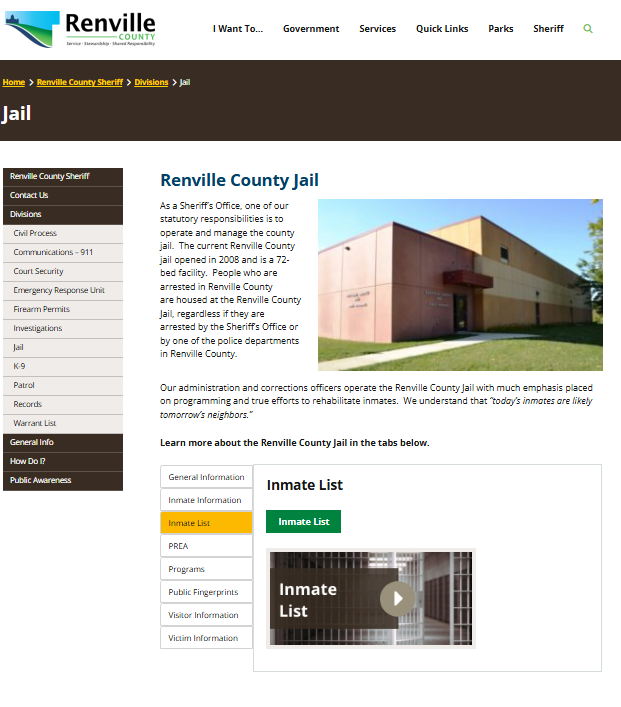
Renville County Jail is a 72-bed detention facility located in Olivia, Minnesota. It houses individuals arrested by the sheriff’s office and local police while they await court proceedings or serve short-term sentences. The jail has served the county for several decades and is managed by the Renville County Sheriff’s Office. Its focus is on maintaining safety, providing secure inmate housing, and offering programs that support personal development. With a 72-bed capacity, the facility ensures that all inmates are properly assigned housing based on security, behavior, and legal status.
Who Resides at Renville County Jail
Renville County Jail accommodates:
- People arrested for minor or serious offenses by local authorities
- Detainees waiting for court appearances or sentencing
- Short-term sentenced inmates serving less than one year
Housing assignments consider safety, behavior, and available space. Male and female inmates are separated, and high-risk individuals receive additional supervision. Staff follows strict jail rules to maintain order while supporting access to programs and daily services.
Inmate Programs and Opportunities
The jail provides programs aimed at improving inmate behavior and supporting rehabilitation. Participation is integrated into daily routines and housing assignments.
Key offerings include:
- Education programs to help with literacy and skill development
- Substance abuse counseling for inmates dealing with addiction
- Mental health support for emotional and psychological care
- Work and service programs that teach responsibility and structure
These programs support inmates in maintaining productive routines, preparing them for future reintegration, and helping create a safer facility environment.
Facility Features and Daily Operations
Renville County Jail is designed for both security and daily operations:
- Housing Units: Separate sections for male and female inmates with additional areas for high-risk individuals
- Daily Routine: Scheduled meals, recreation, program participation, and medical check-ins
- Safety Measures: Continuous monitoring, strict compliance with jail rules, and emergency procedures
By combining secure inmate housing with structured programs, the jail provides a controlled environment that protects the public while offering inmates opportunities for development and structure.
How the Jail Booking Process Works
The Renville County jail booking process is a structured https://www.renvillecountymn.gov/sheriff/divisions/jail/ series of steps that every individual goes through after arrest. It ensures accurate record-keeping, safety, and proper intake of all detainees.
Arrival and Identification
When an individual arrives at the Renville County Jail, staff first verify their identity. Officers check official documents and record personal details, including full name, date of birth, and arrest date. This step ensures that the inmate’s booking info is accurate and links the individual to any existing charges filed. During intake, staff also note the arrest date and the reason for detention, creating an initial log that tracks the person’s time in custody. This documentation is critical for processing time management and for future legal reference.
Health Screening and Property Intake
After identification, jail personnel conduct a basic health and mental health screening. Inmates are asked about current medications, allergies, and medical history. Any personal property is collected, inventoried, and stored securely. Items like wallets, keys, and phones are logged, while clothing is exchanged for jail-issued attire. Inmates may also deposit funds into an inmate trust account, which they can later use for commissary purchases.
Fingerprints and Mugshots
Next, each individual undergoes fingerprinting and a mugshot session. Fingerprints are taken electronically and submitted to law enforcement databases. Mugshots are captured and included in the inmate record for identification purposes. These steps are essential parts of the intake process, ensuring that the jail maintains accurate, up-to-date inmate booking info. The photographs and fingerprints help prevent identity errors and assist with legal procedures if charges are filed.
DNA Sampling and Additional Documentation
In some cases, DNA samples may be collected according to Minnesota state regulations. This is typically required for certain criminal charges and helps law enforcement maintain thorough records. Staff also record all charges filed, including misdemeanors and felonies, and enter the data into the jail management system. The processing time for this stage varies but generally takes several hours, depending on the number of incoming inmates and the complexity of the arrest records.
Final Placement and Orientation
Once all intake steps are complete, inmates are assigned to their housing units. Staff provide information on daily schedules, rules, and available programs, ensuring that everyone understands facility procedures.
Inmate Intake and Initial Requirements
The intake process at Renville County Jail begins with thorough health and mental health screenings, followed by the collection of personal property and clothing. Inmates also have the option to deposit funds into a trust account to manage commissary and hygiene needs.
Health and Mental Health Screening
During intake, every new inmate undergoes a comprehensive health and mental health screening to ensure safety and well-being. Medical staff review current medications, chronic conditions, and any immediate treatment needs. Mental health assessments identify stress, anxiety, or behavioral concerns, helping staff provide support or referrals when necessary. This step is crucial for maintaining a safe environment for both inmates and personnel.
Personal Property and Jail Clothing
Once health screenings are complete, officers handle personal property and jail clothing intake. All personal items are inventoried and securely stored until release. Inmates are issued standard jail clothing, which may include uniforms, socks, and footwear. Items like belts, jewelry, and electronic devices are temporarily held to comply with safety protocols. Clear instructions are provided to ensure inmates know what personal belongings will remain available for commissary use or special requests.
Inmate Trust Account and Commissary Access
Depositing funds into an inmate trust account is an important part of the intake process. These accounts allow inmates to purchase items from the jail’s commissary or canteen, such as hygiene products, snacks, and stationery. Friends or family can deposit money online, by mail, or in person, following the jail’s payment procedures. Officers explain account rules, spending limits, and how inmates can request additional items. Proper use of the trust account helps inmates maintain daily comfort and access essential items.
Health and Safety Checks
- Medical evaluation for physical conditions and medications
- Mental health screening for stress or behavioral concerns
- Immediate attention for urgent medical needs
These checks protect both the inmate and the facility. Staff can identify issues early, reducing potential risks.
Clothing and Property Handling
- The standard jail uniform is issued upon arrival
- Personal items inventoried and securely stored
- Prohibited items, such as electronics or sharp objects, are retained
Clear communication ensures that inmates understand the rules and how to retrieve belongings upon release.
Managing Inmate Trust Accounts
- Deposits accepted online, in person, or via mail
- Funds used for commissary/canteen purchases
- Can include hygiene products, snacks, and approved items
Officers review account balances regularly and provide statements when requested. Trust accounts help maintain routine comfort and access to daily essentials.
Housing Assignments and Daily Life
Renville County Jail assigns inmates to housing units based on safety, behavior, and classification, while daily life follows a structured schedule of meals, recreation, and programs that encourage engagement and positive behavior.
Housing Unit
Inmates live in housing units designed to balance security and daily comfort, with shared cells monitored by staff to maintain order. Cell assignments consider age, gender, medical needs, and behavior, and high-risk inmates may be housed separately for safety. Court Calendar information is also accessible to inmates, helping them stay informed about upcoming hearings and legal obligations. Each unit provides beds, lockers, and showers, and hygiene products are available or can be purchased through the inmate trust account, while staff ensure cleanliness and basic sanitation standards are maintained.
Daily Routines and Recreation
Life at the jail follows a consistent schedule with set times for meals, recreation, and program participation. Inmates begin the day with roll call and hygiene routines, enjoy breakfast, lunch, and dinner with accommodations for dietary needs, and take part in daily recreation, which includes exercise, group activities, and outdoor time. Access to library resources and educational programs, such as literacy, GED preparation, and life skills workshops, helps inmates remain engaged and supports eligibility for privileges like work release.
Inmate Programs and Engagement
Renville County Jail offers programs to support skill development, mental health, and rehabilitation, including educational classes, vocational training, counseling, and religious services. Staff monitor participation closely, which can influence housing decisions and program eligibility, helping inmates stay productive while preparing for eventual reintegration into the community.
Maintaining a Safe and Structured Environment
The combination of structured housing assignments, consistent daily schedules, and available programs ensures inmates live in a secure and organized environment. Regular monitoring by staff, access to meals, hygiene facilities, recreation, and meaningful programs help maintain order while providing opportunities for personal development and positive engagement.
Inmate Mail, Phone, and Communication Policies
Renville County Jail allows inmates to maintain contact with family and friends, but all communication follows strict rules. Mail, phone calls, and electronic messaging are monitored to ensure security and safety.
Inmate Mail
All incoming and outgoing mail is subject to inspection to prevent prohibited items. Regular mail can include letters, postcards, and photos, but it must not contain contraband, threats, or inappropriate content. Privileged mail—such as correspondence with attorneys or court officials—is treated confidentially and is not opened by jail staff.
Some key points to note:
- Address format: Include the inmate’s full name, booking number, and housing unit.
- Restrictions: No cash, stamps, or packages unless approved.
- Inspection: Jail staff review all mail for security, but legal mail remains private.
- Emergency messages: Families can contact the jail to deliver urgent information for inmates.
Mail that violates the rules will be returned or discarded, and repeated offenses can lead to restricted mail privileges.
Inmate Phone Calls
Inmates at Renville County Jail may make outgoing phone calls only. Incoming calls from friends or family are not accepted, ensuring the facility maintains control over security. All calls are monitored and recorded except for privileged legal calls.
Phone service details:
- Service provider: Reliance Telephone
- Payment: Family or friends must fund the inmate’s account to make calls
- Call length: Limited to 15 minutes per call
- Rules: Harassment, threats, or other inappropriate behavior may result in suspension of phone privileges
Using the phone responsibly helps inmates stay connected with loved ones and supports rehabilitation efforts.
Inmate Text Messaging and Email
Renville County Jail also allows certain electronic communication options. Through the facility’s secure platform, inmates can send and receive text messages and emails with approved contacts.
Key features include:
- Approved contacts only: Families must register accounts to receive messages
- Monitoring: All messages are reviewed for security compliance
- Cost: Messages are deducted from the inmate’s trust account
- Limitations: Photos, attachments, or external links may be blocked
Text and email options offer a convenient way for inmates to stay in touch, especially for families who cannot visit frequently.
Commissary and Financial Transactions
Renville County Jail provides inmates with a commissary account to purchase personal items, snacks, and hygiene products, while family and friends can deposit money through secure online portals, money orders, or in-person at designated times. Inmates rely on their inmate trust account to manage funds, and all deposits are credited promptly, allowing purchases without handling cash, although mailed money orders may take several days to process, ensuring smooth financial transactions and easy access to commissary services.
Canteen and Purchase Options
The jail commissary offers inmates snacks, beverages, personal hygiene products, stationery, and small convenience items like socks or phone cards, all available through the inmate’s trust account balance. Purchases follow strict rules for safety, with spending limits enforced and restricted items prohibited, while staff manage deliveries to housing units efficiently to ensure each inmate receives approved items without issues.
Important Considerations for Family and Friends
Supporting an inmate financially helps them maintain comfort and essential daily items, and families should include the booking number on all deposits, avoid sending cash through the mail, and monitor the commissary balance to prevent delays. Following these procedures ensures smooth contributions to the inmate’s account while fully complying with Renville County Jail policies and maintaining secure, efficient access to commissary and financial services.
Special Programs and Work Release Options
Renville County Jail offers several programs designed to support inmates in maintaining employment, continuing education, and preparing for a successful reintegration into the community. These programs include Huber/work release, Electronic Home Monitoring (EHM), and educational or rehabilitation initiatives.
Huber/Work Release Applications
The Huber program allows eligible inmates to leave the jail during the day for work or approved activities and return in the evening. It is primarily for those serving sentences for non-violent offenses and who demonstrate reliable behavior. To apply, inmates must submit application forms to the program director, who reviews eligibility based on the inmate’s sentence, behavior, and compliance with jail rules. Key factors include:
- Type of offense: Non-violent charges are prioritized.
- Employment status: Proof of employment or an approved work assignment is required.
- Behavior record: Compliance with jail rules and no recent infractions.
Once approved, inmates can participate in the work release program under strict supervision. This allows them to maintain employment, contribute financially to their families, and reduce jail overcrowding.
Electronic Home Monitoring
Electronic Home Monitoring provides an alternative for inmates who meet eligibility requirements but require closer supervision than traditional work release allows. Participants wear monitoring devices that track their location and ensure compliance with court-ordered restrictions.
Key points of EHM include:
- 24/7 monitoring: Inmates’ whereabouts are continuously tracked.
- Restricted movement: Allowed only at approved locations such as home, work, or medical appointments.
- Supervision: Jail staff or probation officers monitor compliance daily.
EHM helps maintain community safety while offering inmates the ability to sustain employment, attend school, or participate in treatment programs outside the jail.
Educational and Rehabilitation Programs
Renville County Jail provides several programs to support skill development and personal growth. These programs are available to inmates who qualify based on sentence length, behavior, and program availability.
Options include:
- GED and adult education classes to continue learning and prepare for employment.
- Substance abuse and mental health programs to address underlying challenges contributing to criminal behavior.
- Life skills workshops, including financial literacy and communication skills.
Participation is overseen by program staff and coordinated with the program director, who ensures inmates receive the proper resources and guidance. These programs aim to reduce recidivism and prepare inmates for a productive return to the community.
Visitation and Contact Rules
Visitors at Renville County Jail can see inmates during designated hours, and all communication follows strict rules to maintain safety and order. Emergency messages are handled promptly so families can relay urgent information without delay.
Visitation Policy Overview
Renville County Jail enforces a clear visitation policy that balances safety with inmates’ need to stay connected with family and friends. Visiting hours are structured according to inmate housing, and each visit is monitored to ensure compliance. Visitors must present valid photo identification, pass security screenings, and follow the facility’s dress code. Anyone under a no-contact order is not permitted to visit, and attempts to bypass restrictions are strictly prohibited.
Visiting Hours and Scheduling
Visitation generally takes place on both weekdays and weekends, with time slots assigned based on the inmate’s housing unit. Each visit typically lasts between 30 and 60 minutes, allowing meaningful interaction while ensuring fairness for all inmates. Children may visit only when accompanied by an adult guardian, and all visitors must follow rules regarding personal items, meaning phones, bags, or other unauthorized objects are prohibited. Arriving at least 15 minutes early helps complete check-in procedures and prevents missed visits.
Inmate Communication Methods
Inmates can maintain contact through phone calls, mail, and electronic messaging, all under monitored guidelines. Emergencies are handled promptly through emergency messages, ensuring urgent information reaches inmates quickly. Mail must comply with jail rules, avoiding prohibited items, and phone calls are scheduled according to facility procedures. Following the rules ensures communication privileges remain in place and prevents violations that could restrict visits.
Maintaining Family Contact
Proper adherence to visitation and communication rules allows families to maintain family contact in a safe and organized way. Respecting no-contact orders and following the jail’s procedures helps make visits positive experiences while keeping everyone compliant with Renville County Jail’s regulations.
(FAQs) About the Booking Process
Renville County Jail receives many questions from family, friends, and the community about the booking process, inmate services, and available programs. The following answers cover the most common concerns and provide clear to help visitors understand procedures, rules, and available options.
How long does booking take?
Booking at Renville County Jail usually takes between two and four hours, depending on the current jail population and the specific circumstances of the arrest. During this time, staff complete the inmate booking process, which includes verifying personal information, recording the arrest date and charges filed, taking fingerprints, and photographing the inmate. Health and mental health screenings are also part of the intake process to ensure the individual is safely housed. Once processing is complete, the inmate is assigned to a cell or, if eligible, scheduled for programs like work release or Electronic Home Monitoring (EHM), which can impact how long the overall process takes.
Can I deposit money for an inmate online?
Yes, family and friends can deposit money directly into an inmate’s account online using the jail’s approved system, which helps inmates access the commissary, phone services, and personal items during their stay. The funds are added to the inmate trust account, and the jail provides clear instructions on how to link a payment method and designate the recipient. Online deposits are often faster than in-person deposits and allow the inmate to manage funds for daily necessities. Knowing how to add money in advance can help avoid delays in accessing commissary items and ensure that inmates can maintain communication with loved ones through phone or messaging privileges.
How do I schedule a jail stay appointment?
Appointments for a jail stay at Renville County Jail, whether for pre-sentence or post-sentence intake, are scheduled directly with jail staff to help ensure a smooth intake process. To arrange an appointment, the individual or their representative must provide basic information about the inmate, including the expected arrival time and any special needs. Scheduling in advance allows staff to properly plan for housing assignments, processing time, and any necessary medical or security considerations. While walk-in intakes are accepted in emergencies, appointments are recommended for those entering through programs such as work release or EHM to streamline the booking process and reduce waiting times.
What items are prohibited in inmate mail?
Renville County Jail enforces clear rules for inmate mail to maintain safety and compliance with jail policies. Items not allowed include contraband such as weapons or drugs, powders or liquids like glue, cash or stamps sent outside approved methods, and any material that is considered explicit or threatening. All mail is screened to ensure it meets safety standards before being delivered to the inmate. Following these guidelines helps ensure timely delivery and prevents items from being returned or held. Families and friends are encouraged to review the jail’s mail policy so that communication remains consistent and compliant with regulations.
How do I apply for work release or EHM?
Applications for Huber work release or Electronic Home Monitoring (EHM) are handled by the jail’s program staff and are available to eligible inmates who meet certain requirements. The application process typically involves completing official forms, providing employment or school verification, and obtaining necessary court approvals. Jail staff review each application carefully, considering behavior, sentence length, and current inmate status to determine eligibility. Once approved, inmates follow structured schedules that allow participation in work, educational, or treatment programs while maintaining public safety. These programs support reintegration by providing responsibilities and opportunities for inmates while under monitored supervision.